TOOTH EXTRACTIONS – Queens, NY

Protecting Your Smile from Problematic Teeth

At Breezy Point Smiles in Queens, NY, we work tirelessly to ensure that our patients are able to maintain healthy, functional, and beautiful smiles for a lifetime. However, in some instances, especially if a tooth is severely damaged, decayed, or infected, a tooth extraction becomes necessary in order to protect both your oral and overall well-being. Our talented team offers quick and comfortable tooth extractions in Breezy Point so that your smile is able to get the relief it needs in a timely manner. Read on to learn a little more about tooth extractions and what you can expect during the process, or feel free to give us a call if you have any questions or need to schedule a visit.

Why Choose Breezy Point Smiles for Tooth Extractions?

Tooth with toothbrush and water droplet, representing dental care and oral hygiene services.

Same-Day Appointments for Dental Emergencies

Tooth with toothbrush and water droplet, representing dental care and oral hygiene services.

Wisdom Tooth Extractions Available

Tooth with toothbrush and water droplet, representing dental care and oral hygiene services.

Dedicated, Experienced, & Friendly Dental Team

Woman with concerned expression touching her mouth, suggesting dental pain or discomfort in indoor setting.

Reasons Why Tooth Extractions Are Necessary

Tooth extractions aren’t recommended lightly—if there’s a chance that your affected tooth can be saved or repaired, we’ll likely recommend a restorative treatment like a dental crown or root canal therapy. However, a tooth extraction is sometimes the best choice for the long-term health of your smile, especially if you’re affected by the following:
  • Extensive decay or irreparable damage in a tooth.
  • Severe dental infection that could potentially spread to other teeth.
  • A baby tooth that has not fallen out on its own.
  • Advanced gum disease or jawbone degradation.
  • Wisdom teeth that need to be removed, either to prevent future complications or because they’ve become impacted.
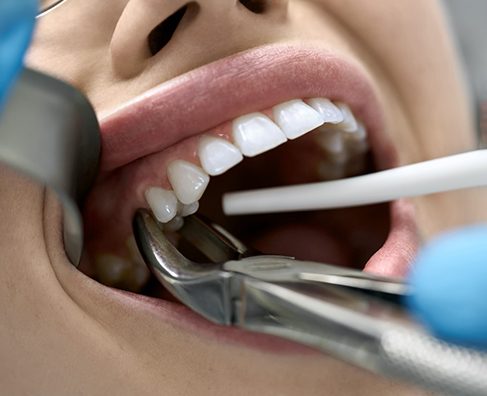
Dental professional performing tooth extraction procedure using surgical instruments on patient's mouth.

The Process of Removing a Tooth

There are usually two methods for removing a tooth: simple extraction and surgical extraction. If the tooth that needs removal has fully emerged and is completely above the gumline, we can perform a simple extraction. We’ll numb your mouth and gently grasp the tooth with special forceps before carefully rocking it back and forth until it naturally separates from the gum tissue.
However, if the tooth hasn’t fully erupted from your gums, it might need to be surgically extracted. For this method, we’ll make a small incision in the gums to access more of the tooth before we begin removing it. The only way to know for sure what type of extraction you need is to visit us for a consultation; we’ll need to assess your situation thoroughly before coming up with the best means of treating you!
Healthcare professional administering vaccine to young woman in medical clinic setting.

Tooth Extraction Aftercare

Of course, after your extraction our team will provide you with detailed post-op instructions to follow, which ensures that your recovery time goes by smoothly and without issue. There are several things you should consider while recuperating:
  • Take your over-the-counter and prescribed pain medication as instructed, typically before the numbness of the initial surgery wears off
  • You can manage additional pain and swelling with over-the-counter pain relievers, or by applying an ice pack or cold compress to the outside of your mouth on the side of your extraction.
  • Keep the surgical site clean by brushing and flossing around it carefully. After 24 hours, you can rinse your mouth using a mixture of 8oz warm water with ½ tsp of salt.
  • Stay hydrated and get plenty of rest. Also avoid exercising or strenuous physical activity.
  • Avoid hard, crunchy, sticky, or spicy foods for at least several days. Also refrain from using a drinking straw, as the suction can easily hurt the blood clot that forms over the surgical site.
  • Avoid smoking and using tobacco products.
It’s normal to experience some swelling, discomfort, or light bleeding as you heal up from your tooth extraction; but if these symptoms don’t seem to be clearing up after a few days, don’t hesitate to get in touch with us right away.

Frequently Asked Questions

Q. What is a tooth extraction and why might I need one?
A. A tooth extraction is the removal of a tooth from its socket in the jawbone. At Breezy Point Smiles, extractions are recommended when a tooth is severely decayed, damaged beyond repair, infected, impacted (like wisdom teeth), or when baby teeth fail to fall out on their own.
Q. Is a tooth extraction painful?
A. Before an extraction, your dentist will numb the area with local anesthesia to ensure you feel minimal discomfort during the procedure. Most patients experience pressure but not sharp pain. We also offer techniques to keep you comfortable throughout.
Q. What types of extractions do you offer?

A. We provide:

  • Simple extractions – for fully erupted teeth above the gumline
  • Surgical extractions – for impacted or non-erupted teeth (such as wisdom teeth)

Your dentist will determine the appropriate method during your consultation.

Q. How should I prepare for a tooth extraction?

A. Preparation may include:

  • Sharing your full medical/dental history
  • Discussing medications you take
  • Avoiding smoking and alcohol before the procedure

Your dentist will give you specific pre-op instructions based on your case.

Q. What can I expect during recovery?

A.  After an extraction, it’s normal to experience some swelling or minor bleeding. Follow-up care tips include:

  • Take pain relievers as directed
  • Apply ice packs as needed
  • Rinse gently with salt water after 24 hours
  • Avoid hard foods, hot drinks, and using a straw
  • Stay hydrated and rest

If pain or swelling worsens after a few days, contact us right away.
Q. How long does healing take after an extraction?
A. Healing time varies by patient and tooth location, but most people recover within 1–2 weeks. Surgical extractions (like impacted wisdom teeth) may take longer. Proper aftercare helps speed healing.
Q. Can you extract wisdom teeth too?
A.  Yes — we offer wisdom tooth extractions, including impacted wisdom teeth, with careful evaluation and treatment planning to minimize risk and discomfort.
Q. How do I schedule a tooth extraction at Breezy Point Smiles?
A. Call 718-474-6500 or request an appointment online. Same-day appointments for dental emergencies, including painful or broken teeth, are often available.
Dentist examining patient's teeth with dental mirror and suction tool during oral examination.

Soft Tissue Laser

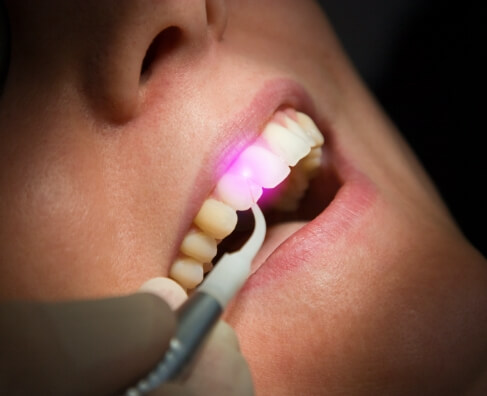
Nowadays, many procedures involving the gums are performed using a soft-tissue laser. We can use the energy from the laser to excise unneeded or infected tissue while also sterilizing the area to prevent bacteria from causing any more damage. Many patients prefer soft tissue lasers over traditional instruments because they cause very little discomfort; the mouth often doesn’t need to be numbed at all, and there is very little if any bleeding to worry about afterwards.
Dental patient receiving laser treatment on teeth during cosmetic dentistry procedure at Breezy Point Smiles.

Hard Tissue Laser

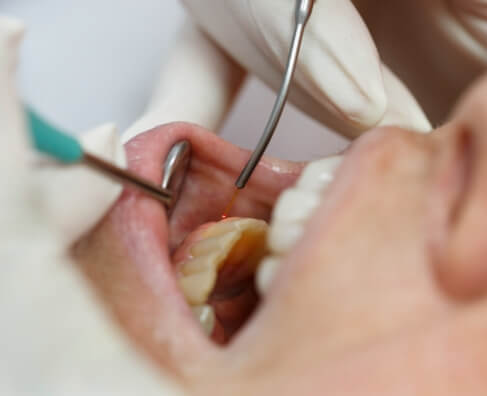
In addition to lasers for sterilizing and removing soft tissues, we also have lasers that are designed specifically for hard tissue – namely your teeth and bones. We often use our hard tissue lasers to prepare teeth for filling placement. We can remove the decayed parts of the tooth without damaging the rest of the enamel, and the lack of pain means there is no need for us to use a local anesthetic to numb the tooth for such procedures.
Gloved hand holding dental handpiece with ultrasonic scaler unit in background

Co2 Laser

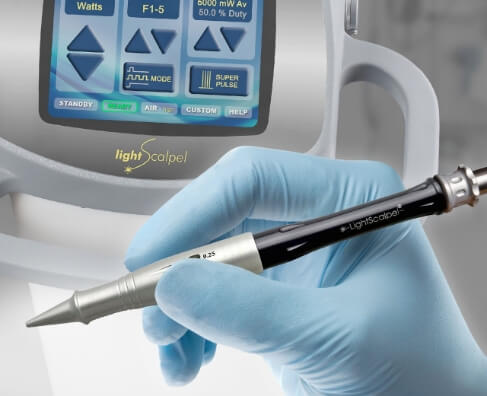
CO2 lasers have been used in dentistry for more than 25 years. They can be used for a wide range of dental procedures, including soft tissue treatments around dental implants and the removal of gum tissue that has become infected as a result of gum disease. The laser energy is generated using carbon dioxide, and it is set at a wavelength that vaporizes the water found in soft tissue, allowing for quick, efficient cutting.