RESTORATIVE DENTISTRY – Queens, NY
Make Your Smile Whole Again
Teeth are not like your bones; they can’t fix themselves if they’re broken. But that doesn’t mean you’re stuck with damaged teeth for the rest of your life. Dr. Kaminer routinely uses crowns, fillings, and other restorations in order to reverse the dental damage done by tooth decay and physical trauma. As soon as you notice a tooth in need of repair, contact at Breezy Point Smiles in Queens, NY so that we can restore it along with your oral health.
Why Choose Breezy Point Smiles for Restorative Dentistry?

Practice That Has Been Around for 35 Years
Technology for Creating and Placing Crowns Fast
High Class Dentistry for Middle Class People
Tooth-Colored Fillings
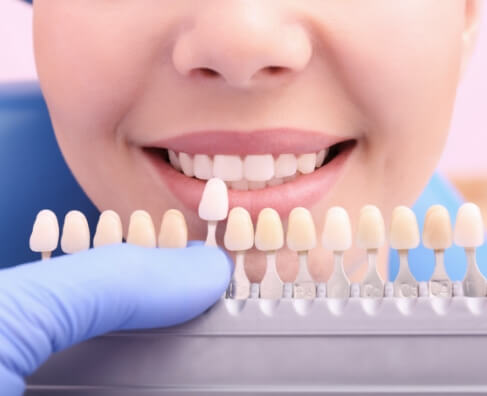
To treat a cavity, we first remove any bacteria that’s still in the area. Then, to replace the enamel that was lost, we place a small amount of composite resin. This type of filling is very different from the metal fillings of yesterday. For one thing, it matches the tooth’s color so closely that many people won’t even realize it’s there. For another, it bonds directly with the enamel, giving the tooth additional support to strengthen it.
Immediate Dental Crowns
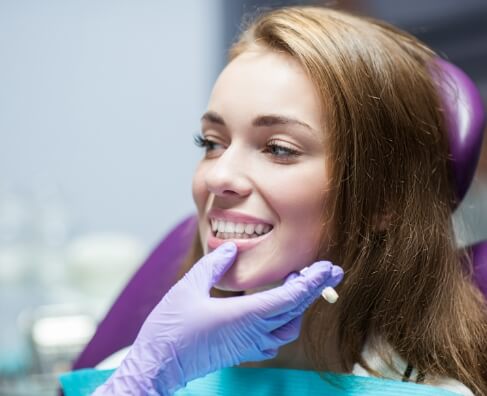
Before repairing a tooth, we need to check to see how extensive the damage is. Sometimes it’s beyond the point that a filling alone can fix it, but if it’s still salvageable, we’ll likely place a dental crown. With the help of our in-office Medit scanner, we can design and place crowns in less time than other practices. Our EMAX and zirconia crowns can be personalized to look just like your natural teeth, so most people won’t even realize that you ever needed dental work in the first place.
Root Canal Therapy
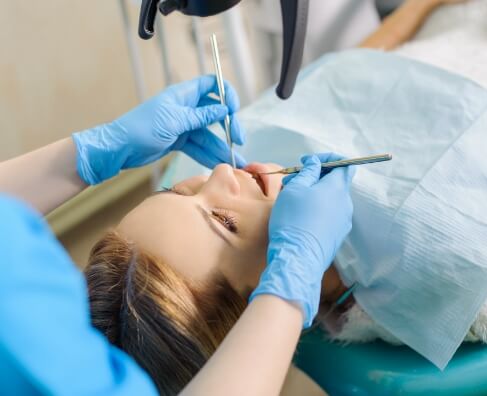
A cracked tooth is often vulnerable to infection, as it gives oral bacteria a chance to slip past the enamel that would normally keep them out. An infected tooth needs to be treated if you want to stop the problem from spreading. With root canal therapy, we can remove harmful bacteria from the tooth along with any tissue that’s beyond saving. Doing so will stop your pain, and we’ll repair the tooth afterwards with a dental crown.
Learn More About Root Canal Therapy

Tooth Extractions
Sometimes teeth need to be removed if there’s not enough natural structure remaining to support a restoration or if there’s a severe infection that can’t be resolved with a root canal. We’ll be as gentle as possible during the extraction process, and we’ll make sure to numb your mouth first so that you don’t feel anything while we work on your smile. A removed tooth should be replaced with a denture, bridge, or dental implant before too long.
Frequently Asked Questions
Q. What is restorative dentistry and how can it help my smile in Breezy Point,NY?
A. Restorative dentistry includes treatments that repair or replace damaged or missing teeth, such as tooth-colored fillings, dental crowns, root canal therapy, and extractions. These procedures help restore the function, health, and appearance of your smile, improving chewing comfort and overall oral health.
Q. How do I know if I need a dental filling or a crown at Breezy Point Smiles?
A. If you have tooth decay, cracks, or a broken tooth, your dentist will evaluate how much tooth structure remains. Tooth-colored fillings are used for smaller cavities, while dental crowns are recommended when more strength or protection is needed for the tooth.
Q. Are tooth-colored fillings better than traditional metal fillings?
A. Yes — at Breezy Point Smiles in Breezy Point, Queens, we use modern composite resin fillings that are natural-looking, bond directly to the tooth, and help strengthen the tooth structure without the dark metallic appearance.
Q. What can I expect from a dental crown procedure?
A. A dental crown restores a damaged or weakened tooth. We often use advanced digital scanning (Medit) to design EMAX and zirconia crowns that match your natural teeth in shape and color. Many crowns can be created and placed efficiently using in-office technology.
Q. Does restorative dentistry include root canal therapy?
A. Yes. Root canal therapy is part of restorative care when a tooth becomes infected or painful. It removes infected tissue inside a tooth, eliminates pain, and is typically followed by a dental crown to protect the restored tooth.
Q. Do you provide gentle tooth extractions when a tooth can’t be saved?
A. Absolutely. When a tooth is too damaged to be restored effectively, we perform gentle extractions with proper anesthesia. Your dentist will then discuss replacement options like dentures, bridges, or dental implants to restore your smile.
Q. How soon can I get restorative treatment if I’m in pain?
A.We encourage patients experiencing dental pain, broken teeth, or discomfort to call our Queens office right away. We often offer same-day care or urgent appointments to address pain quickly and begin restorative treatment.
Q. Is restorative dentistry covered by dental insurance?
A. Many restorative procedures — like fillings, crowns, and root canals — are covered at least partially by dental insurance. Our team at Breezy Point Smiles works with various insurance plans and can help you understand your benefits and payment options.