REPLACE MISSING TEETH – Queens, NY
No More Gaps in Your Grin
There are few things worse for a smile than missing teeth. Even one gap can cause the jawbone to shrink, compromise chewing power, and make you feel uncomfortable about showing other people your grin. But no matter how many teeth you’ve lost, it’s always possible to fill in the gaps. Whether it’s just one tooth or all of them, Dr. Kaminer has multiple options for giving you a complete smile again. Does someone in your family need a new tooth? Call us immediately.
Why Choose Breezy Point Smiles for Tooth Replacement?

Unprecedented Dental Technology for Breezy Point
In-Office Dental Implant Placement
Practice Has Been in Area for Over 35 Years
Dental Bridges
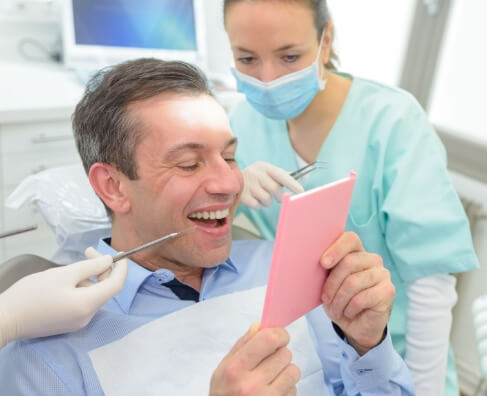
A dental bridge is a relatively simple restoration comprised of two crowns and a false tooth. When a tooth is missing, we can remove a small amount of enamel from the neighboring teeth in order to place the bridge so that you can eat and speak normally again. Like individual crowns, bridges can be made out of materials that match the color and light-reflective properties of enamel, letting them blend in perfectly with your natural teeth.

Dentures
Unlike bridges that are fixed in place, dentures are a removable form of tooth replacement. Partial dentures are custom-made to accommodate any number of gaps throughout your smile whereas full dentures replace the entire arch at once. Because you can take them out of your mouth, you can clean underneath them and brush your gums to make sure that bacteria don’t build up in any areas that you can’t reach. Thanks to their affordability, dentures make tooth replacement more accessible for everyone.
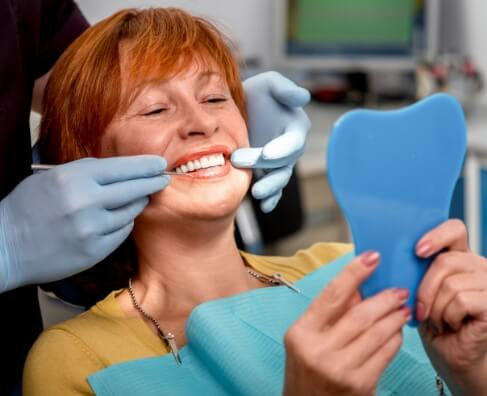
Dental Implants
Dental implants have revolutionized the way dentists think about replacing teeth. We don’t just focus on restoring the top portion of the tooth in order to fill in the visible gaps; we also think about the root portion that previously rested in the jawbone. Dental implants can perform all the same functions as tooth roots if they’re allowed to bond with the jawbone, and at our office, we can place implants in addition to restoring them.
Learn About Dental Implants

Full Mouth Reconstruction
Some smiles need more attention than others. The full mouth reconstruction process revolves around creating unique treatment plans for each patient so that they can correct several problems at the same time. We might combine partial dentures, fixed bridges, and/or dental implants with other restorative treatments like fillings and crowns. Even if you’ve neglected your oral health for years, we can find a way to repair the damage.
Frequently Asked Questions
Q. Why is it important to replace missing teeth?
A. Missing teeth can lead to jawbone shrinkage, misalignment of surrounding teeth, and decreased chewing ability — which can impact your oral health and confidence. Replacing missing teeth helps restore function and prevent further dental issues.
Q. What tooth replacement options are available at Breezy Point Smiles?
A. We offer multiple solutions including dental implants, dental bridges, partial and full dentures, and comprehensive full mouth reconstruction plans tailored to your unique smile goals.
Q. How do dental implants work?
A.Dental implants act like natural tooth roots by fusing with your jawbone. This provides stable support for prosthetic teeth that look, feel, and function like real teeth — helping preserve bone health and maintain bite alignment.
Q. Are dental implants better than dentures or bridges?
A. Implants are often considered the most long-lasting and natural-feeling option because they stimulate bone growth and help prevent bone loss. Bridges and dentures are effective alternatives, especially when implants are not suitable. Our dentists will recommend the best option for your oral health.
Q. Am I a candidate for dental implants?
A. Most adults with good overall and oral health are candidates for dental implants. Sufficient jawbone density and healthy gums are important factors — a consultation with our team will help determine your eligibility.
Q. What’s the difference between partial and full dentures?
A. Partial dentures replace a few missing teeth in a row, while full dentures replace an entire arch of teeth. Both are custom-made for comfort and improved function.
Q. How long does it take to replace missing teeth?
A. Timelines vary depending on the treatment you choose. Implants require healing time for bone integration, whereas bridges or dentures can often be completed more quickly. Our team will walk you through the expected timeline during your consultation.
Q. What can I expect after tooth replacement treatment?
A. After your procedure, you may experience mild soreness. Follow-up care and good oral hygiene help ensure successful healing. For implants, gum tissue typically begins healing within a week, with full recovery in the following weeks.