
March 27, 2024
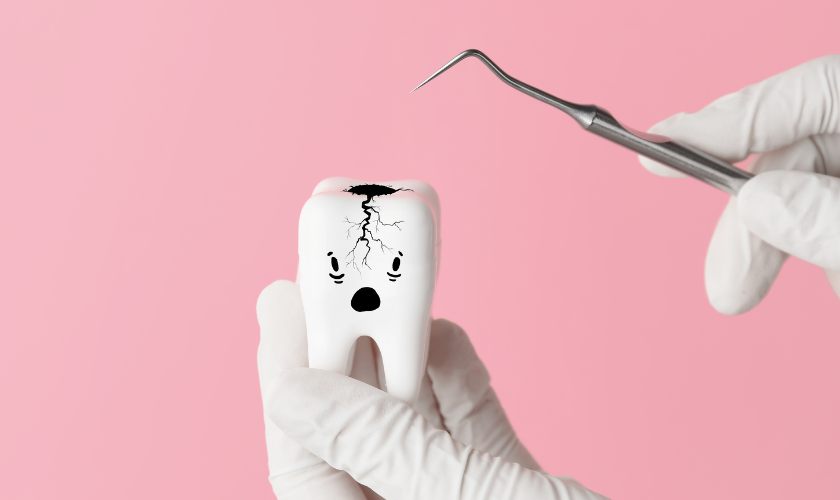
Cavities and cracked teeth are common dental issues that can lead to discomfort and further oral health complications if left untreated. Recognizing the signs and knowing when to seek dental care is crucial for maintaining healthy teeth and gums.
Signs of Cavities:
- Tooth Sensitivity: Sensitivity to hot, cold, sweet, or acidic foods and drinks can indicate the presence of a cavity.
- Toothache: Persistent or intermittent tooth pain, especially when biting down, can be a sign of advanced cavity formation.
- Visible Holes or Pits: If you notice visible holes, pits, or dark spots on your teeth, it may indicate decay and cavity formation.
- Tooth Discoloration: Discoloration or staining on the surface of a tooth can be a sign of enamel erosion and cavity development.
- Bad Breath: Chronic bad breath or a foul taste in the mouth, particularly when combined with other symptoms, may indicate a cavity.
Signs of a Cracked Tooth:
- Sharp Pain: Sudden, sharp pain when biting down or chewing can indicate a cracked tooth.
- Sensitivity to Temperature: Sensitivity to hot or cold foods and beverages, especially in a specific area of the mouth, can be a sign of a cracked tooth.
- Swelling or Inflammation: Swelling or inflammation around a tooth or in the gums near a cracked tooth can occur due to infection or irritation.
- Difficulty Chewing: Difficulty chewing or discomfort while eating can be a result of a cracked tooth.
When to Seek Dental Care:
- Persistent Symptoms: If you experience persistent tooth pain, sensitivity, or discomfort, it’s essential to schedule an appointment with your dentist.
- Visible Changes: Any visible changes in the appearance of your teeth, such as dark spots, holes, or cracks, should be evaluated by a dental professional.
- Bad Breath: Chronic bad breath accompanied by other oral symptoms may indicate underlying dental issues, including cavities or cracked teeth.
- Preventive Check-ups: Regular dental check-ups and cleanings can help detect cavities and cracked teeth early, preventing further complications.
Conclusion:
Being aware of the signs of cavities and cracked teeth can help you take proactive steps to maintain your oral health. If you notice any of these symptoms, don’t delay seeking dental care. Early detection and treatment are key to preventing more extensive dental problems and ensuring a healthy, pain-free smile.
About the Author
Dr. Ron Kaminer has been providing outstanding oral healthcare for well over three decades. He earned his dental degree from the State University of New York at Buffalo School of Dental Medicine and regularly seeks continuing education to refine his skills. He offers a wide variety of high-quality services, including fillings, root canal therapy, teeth whitening, cosmetic bonding, and veneers. If you’d like to schedule an appointment, visit his website or call 718-474-6500.